

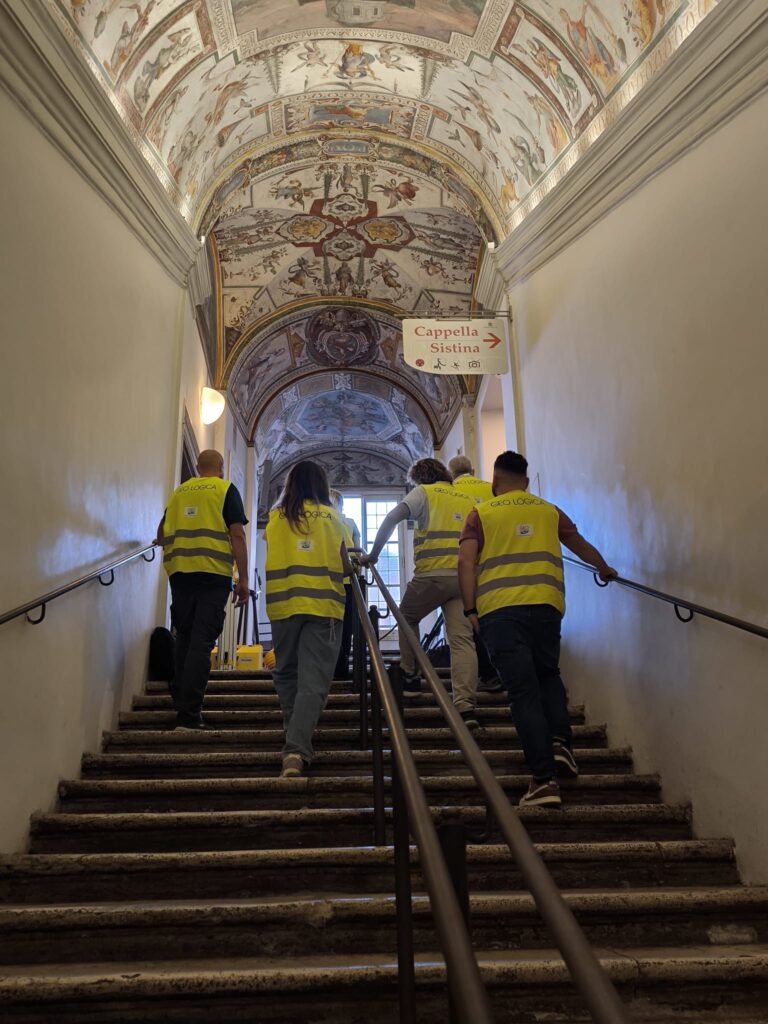
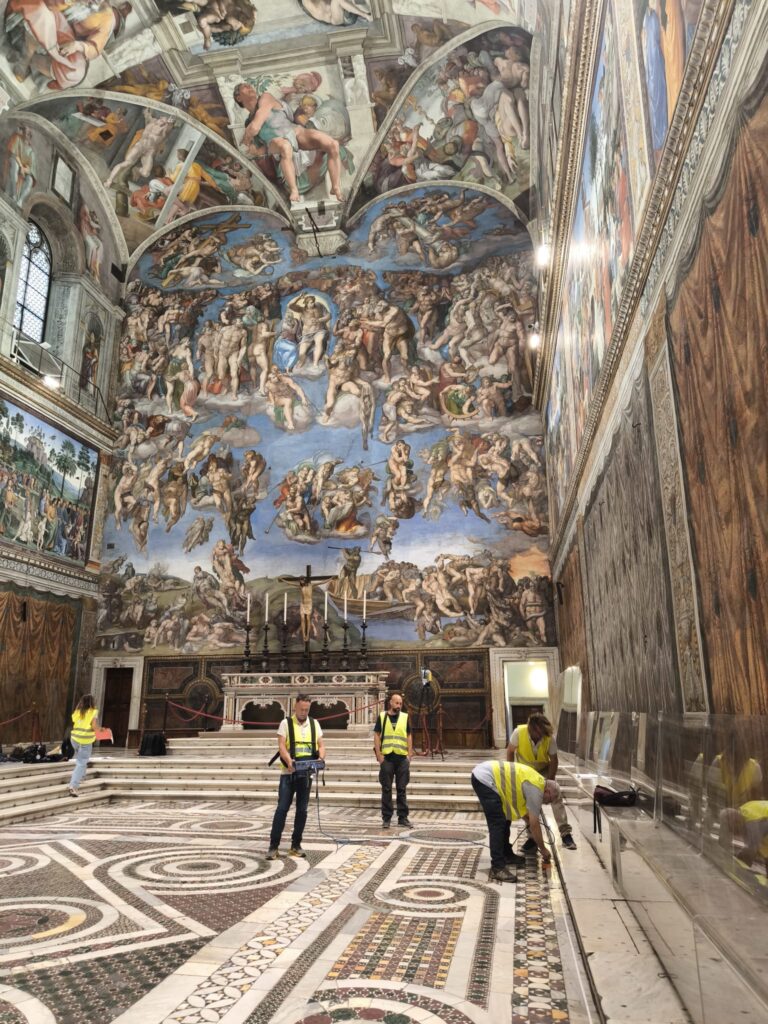
Our company carried out a high-resolution diagnostic investigation campaign at the Sistine Chapel, aimed at characterising the flooring system and the underlying structures.
High-resolution Ground Penetrating Radar (GPR) surveys were performed on the floor of the Sistine Chapel to reconstruct the stratigraphic composition of the flooring and identify the main features and discontinuities beneath the walking surface.
The museum spaces located beneath the Sistine Chapel were also surveyed using laser scanning technology, providing a detailed geometric and typological survey of the flooring and load-bearing structures. The scans produced a high-precision point cloud, integrated with colour information acquired through panoramic imaging, enabling a detailed three-dimensional representation of the spaces and structural elements.
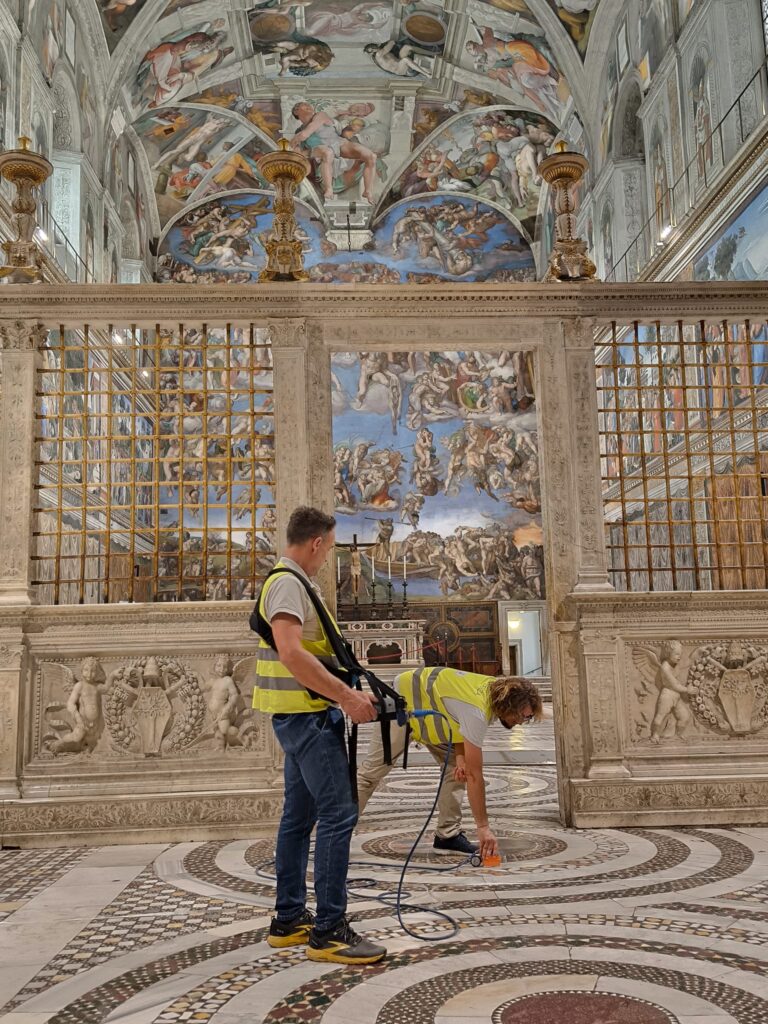
Particular attention was also devoted to assessing the conservation condition of the structures. A crack-pattern survey was carried out both on the floor of the Sistine Chapel and on the vaults below, documenting the distribution, geometry, and characteristics of the main cracks and discontinuities.
The investigation campaign was complemented by a series of masonry investigations, including mortar sampling, endoscopic inspections, and Windsor tests. These investigations provided additional information on the construction characteristics and mechanical properties of the masonry, complementing the results obtained from the geophysical surveys and geometric documentation.
The integration of these complementary diagnostic techniques provided a multidisciplinary understanding of the Sistine Chapel's flooring and underlying structures, combining geometric, stratigraphic, structural, and material information within a single interpretative framework.


Contact our team of experts
Do you need information, advice or an offer for your project?
Our technical staff is at your disposal for personalized analyses, surveys and studies.